
 Office Fit-Out Services
 Office Furniture
 Services
 Shop
Shop About Us
 Contact Us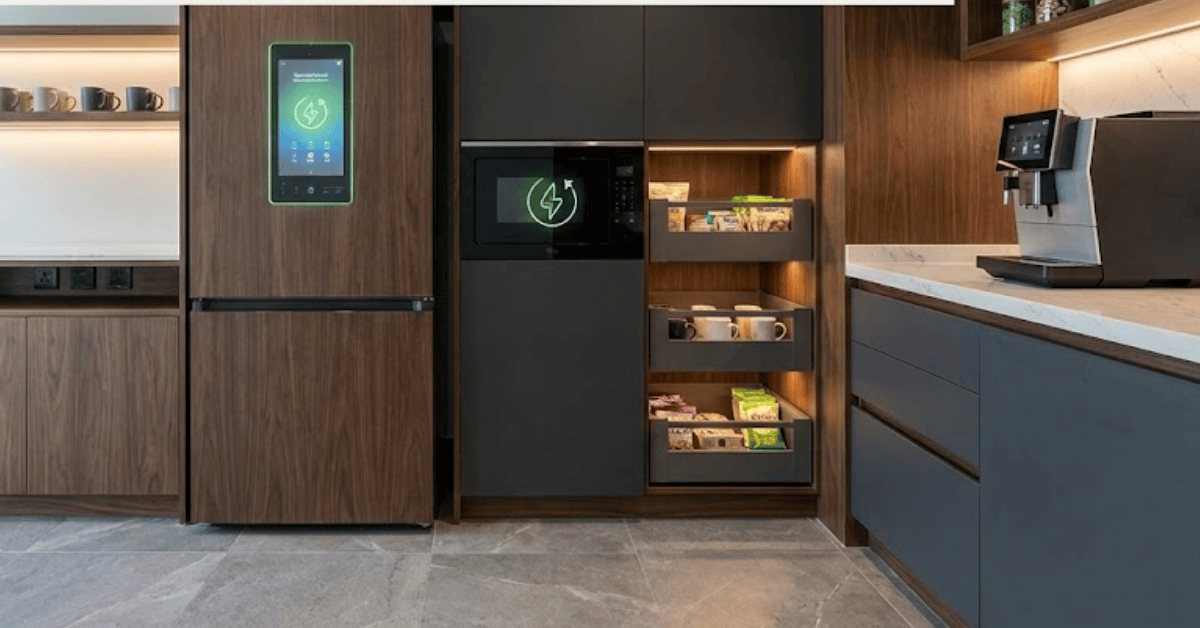
Smart Appliances for Modern Offices
Summary
Modern offices are increasingly shaped by technology—not only in how people work, but in how spaces consume energy. Appliances once chosen purely for convenience are now evaluated for performance, sustainability, and long-term operating costs. From pantry equipment to office utilities, smarter choices are redefining efficiency.
At the center of this shift is energy efficiency. Smart appliances reduce power consumption, adapt to real usage patterns, and support sustainability goals without sacrificing comfort or functionality. In contemporary offices, these devices are no longer optional upgrades; they are core components of responsible workspace design.
This article explores how tech-driven, low-energy appliances are transforming modern offices and why efficiency-focused decisions matter more than ever.
Why Energy Efficiency Matters in Office Appliances
Office appliances operate daily, often for long hours.
Common challenges include:
-
High electricity consumption
-
Heat generation
-
Inconsistent usage patterns
-
Rising operational costs
Prioritizing energy efficiency reduces waste while maintaining performance. Over time, efficient appliances lower utility bills and support environmental commitments without disrupting daily routines.
The Shift Toward Smart Office Infrastructure
Smart appliances differ from traditional equipment in one key way: adaptability.
They can:
-
Adjust output based on demand
-
Enter low-power standby modes
-
Provide usage data
-
Integrate with building management systems
In offices developed through Commercial Fit Out Services Dubai, smart infrastructure increasingly supports efficiency across multiple systems rather than operating in isolation.
Smart Kitchen Appliances in Office Pantries
Pantry areas are among the highest energy consumers in offices.
Common appliances include:
-
Refrigerators
-
Microwaves
-
Coffee machines
-
Dishwashers
Modern, smart versions are designed with energy efficiency in mind—using sensors, optimized cycles, and insulation improvements to reduce consumption.
Projects involving Kitchen Fit Out Design Services in Dubai often integrate energy-rated appliances that balance daily convenience with responsible energy use.
Refrigeration: Smarter Cooling, Lower Consumption
Office refrigerators run continuously.
Smart refrigeration solutions:
-
Regulate cooling based on load
-
Minimize temperature fluctuation
-
Reduce compressor cycling
These features significantly improve energy efficiency, especially in shared kitchen environments where doors open frequently.
Coffee Machines and Beverage Systems
Coffee machines are essential—but energy-intensive.
Newer systems include:
-
Auto shut-off features
-
Insulated boilers
-
Energy-saving standby modes
By upgrading to smart beverage equipment, offices reduce idle energy use while maintaining availability throughout the day.
Dishwashers Designed for Office Use
Commercial-grade dishwashers designed for offices prioritize:
-
Shorter wash cycles
-
Lower water temperatures
-
Reduced standby power
These features support energy efficiency without compromising hygiene—an important balance in shared environments.
Lighting-Integrated Appliances and Controls
Some smart appliances integrate directly with lighting and control systems.
For example:
-
Motion-activated equipment
-
Time-based usage scheduling
-
Load-based power adjustments
When appliances respond to real usage, energy efficiency becomes automatic rather than dependent on user behavior.
Appliance Selection During Renovation Projects
Renovation is the ideal moment to upgrade appliances.
During Office Renovation Services Dubai, infrastructure upgrades allow:
-
Improved electrical planning
-
Efficient appliance placement
-
Better ventilation and heat management
This integrated approach enhances performance and extends appliance lifespan.
Heat Management and Energy Performance
Appliances generate heat—especially in compact spaces.
Smart equipment:
-
Produces less waste heat
-
Improves internal airflow
-
Reduces cooling system load
Better heat control indirectly improves overall energy efficiency by lowering air-conditioning demand.
Data-Driven Energy Monitoring
Many smart appliances provide usage data.
This allows offices to:
-
Track consumption patterns
-
Identify inefficiencies
-
Adjust operational schedules
Data-driven insights turn energy efficiency from an abstract goal into a measurable outcome.
Appliances and Workplace Sustainability Goals
Efficiency supports broader sustainability strategies.
Low-energy appliances:
-
Reduce carbon footprint
-
Support green certifications
-
Align with ESG initiatives
Offices designed through Interior Design for Businesses in Dubai increasingly treat appliance efficiency as part of the overall sustainability narrative.
Durability and Efficiency Go Hand in Hand
Efficient appliances are often better built.
Benefits include:
-
Longer service life
-
Fewer breakdowns
-
Lower replacement frequency
Durability reinforces energy efficiency by reducing waste associated with frequent replacement.
Balancing Cost With Long-Term Savings
Smart appliances may have higher upfront costs.
However:
-
Reduced energy bills
-
Lower maintenance needs
-
Longer lifespan
These factors often make efficient equipment more economical over time.
Integration With Office Design
Appliances should integrate seamlessly into the workspace.
Designers working with Office Interior Design Services in Dubai ensure that smart equipment:
-
Fits spatial constraints
-
Supports workflow
-
Maintains visual consistency
Efficiency should enhance design—not disrupt it.
Common Mistakes in Appliance Selection
Avoid:
-
Choosing residential-grade equipment for offices
-
Ignoring energy ratings
-
Overlooking standby power consumption
-
Failing to plan ventilation
These mistakes often undermine energy efficiency goals.
Key Takeaways
-
Energy efficiency is essential in modern office appliances
-
Smart equipment adapts to real usage patterns
-
Kitchen appliances are major energy consumers
-
Renovation projects enable infrastructure upgrades
-
Heat management supports efficiency
-
Data tracking improves performance
-
Long-term savings outweigh initial costs
Conclusion
Smart appliances are reshaping how modern offices operate. Beyond convenience, they represent a shift toward responsibility—reducing energy use while maintaining comfort and performance.
By prioritizing energy efficiency, organizations lower operational costs, support sustainability goals, and future-proof their workspaces. In modern offices, smart equipment is not a luxury—it is a practical investment in efficiency, resilience, and thoughtful design.
FAQs
What makes an appliance energy efficient?
It uses less power while delivering the same or better performance through smart design and controls.
Are smart appliances suitable for all offices?
Yes, when selected based on actual usage needs.
Do efficient appliances reduce comfort?
No. Most improve performance while consuming less energy.
Is appliance efficiency important during renovation?
Yes. Renovation allows infrastructure to support efficient equipment properly.
Visit Our Showroom: Pin Location 📍
In Case You Missed These Posts:

