
 Office Fit-Out Services
 Office Furniture
 Services
 Shop
Shop About Us
 Contact Us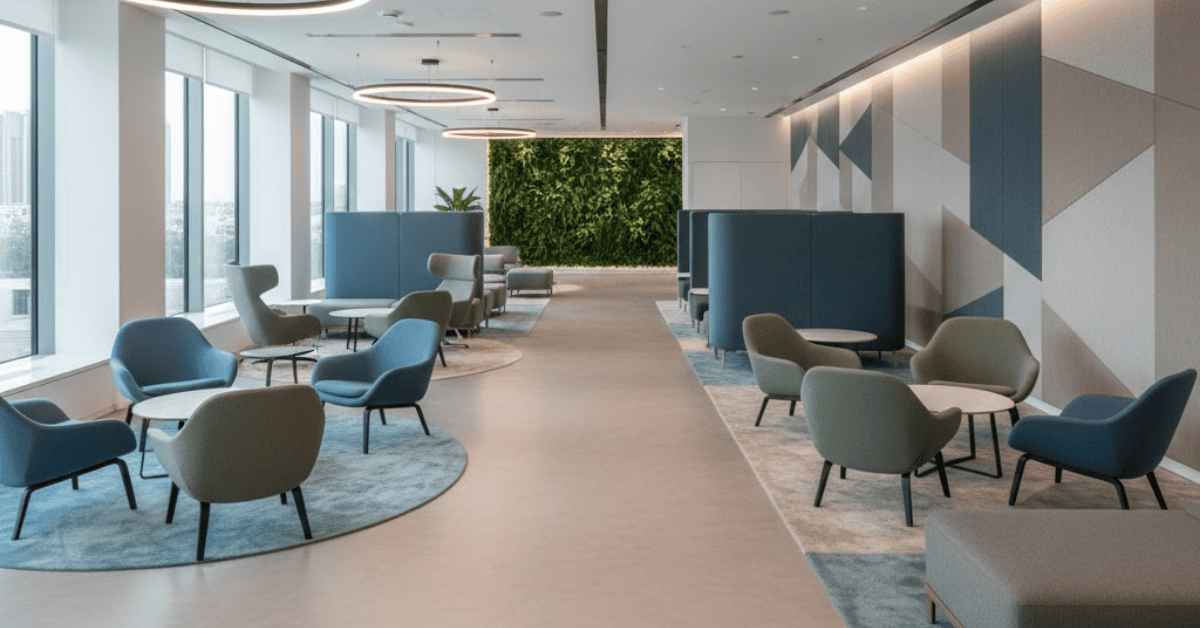
The Psychology Behind Commercial Design
Walk into any office and you’ll feel something almost immediately. Calm. Energy. Pressure. Openness. Focus. Sometimes motivation. Sometimes fatigue. That reaction doesn’t come from policy or management alone — it comes from space.
Commercial interiors quietly shape how people think, behave, and perform. This is where design behavior becomes central to modern workplace planning. Layout, light, material, acoustics, and flow influence mindset long before a task begins.
In this article, we explore the psychology behind commercial design — how physical environments affect employee mindset, productivity, collaboration, and emotional wellbeing. And how thoughtful design, guided by experienced teams like Cosmo Crafts, transforms offices from functional containers into behavioral ecosystems.
1. Why Psychology Matters in Commercial Design
Design isn’t neutral. Every choice sends a signal.
A narrow corridor can increase stress.
Poor lighting can reduce focus.
Excessive noise can trigger fatigue.
Lack of privacy can cause disengagement.
Design behavior explains why people react the way they do to spaces — and why commercial interiors must be planned with empathy, not just efficiency.
Modern organizations investing in
Office Renovation Services Dubai
are increasingly prioritizing psychological comfort alongside aesthetics.
People don’t work in spaces. They work with them.
2. Space and the Sense of Control
One of the strongest psychological drivers at work is autonomy. Employees feel more motivated when they can control their environment — even in small ways.
Design elements that support control:
-
Adjustable lighting
-
Choice between open and quiet zones
-
Flexible seating
-
Personal storage
-
Clear wayfinding
Design behavior research shows that perceived control reduces stress and increases satisfaction. Offices that offer options — not rigidity — nurture confidence and focus.
3. Layout and Cognitive Load
Poor layout creates invisible mental strain. When people constantly navigate obstacles, noise, or unclear circulation, cognitive energy drains before work even begins.
Psychologically supportive layouts:
-
Clear circulation paths
-
Logical zoning (focus, collaboration, social)
-
Reduced visual clutter
-
Balanced spacing between desks
This clarity is a cornerstone of thoughtful planning within
Commercial Fit Out Services Dubai,
where workflow efficiency is directly tied to mental ease.
Less friction equals more mental bandwidth.
4. Light, Mood, and Mental Energy
Light regulates circadian rhythm, alertness, and emotional balance.
Natural light:
-
Improves mood
-
Reduces fatigue
-
Enhances focus
-
Supports long-term wellbeing
Artificial lighting, when poorly designed, can cause headaches and disengagement.
Psychologically informed design behavior integrates:
-
Daylight access
-
Neutral color temperatures
-
Layered lighting (task, ambient, accent)
Lighting doesn’t just illuminate work — it shapes emotional tone.
5. Color Psychology in the Workplace
Color affects perception before logic catches up.
Common psychological responses:
-
Blues → calm, trust, focus
-
Greens → balance, restoration
-
Neutrals → clarity, professionalism
-
Warm accents → energy, collaboration
Overstimulating colors may energize briefly but exhaust over time. Balanced palettes support sustained performance — a principle often applied in
Interior Design for Businesses in Dubai.
Color isn’t decoration. It’s emotional architecture.
6. Texture, Touch, and Emotional Comfort
Humans respond instinctively to tactile environments. Hard, cold surfaces create distance; softer textures invite comfort.
Psychological benefits of tactile balance:
-
Reduced stress response
-
Improved sense of belonging
-
Enhanced emotional grounding
Materials like wood, fabric panels, and acoustic surfaces soften commercial spaces — making them feel human, not institutional.
Design behavior becomes tangible through touch.
7. Noise, Acoustics, and Mental Fatigue
Sound is one of the most underestimated psychological stressors in offices.
Persistent noise:
-
Disrupts concentration
-
Increases cortisol levels
-
Reduces task accuracy
Psychologically supportive design includes:
-
Acoustic panels
-
Soft flooring
-
Zoning loud and quiet activities
-
Glass partitions with acoustic performance
Solutions like
Flooring and Glass Partition Services Dubai
help balance openness with auditory comfort.
Silence, when intentional, is powerful.
8. Social Spaces and Behavioral Signals
Design communicates values.
Open lounges signal collaboration.
Private rooms signal respect for focus.
Break areas signal care for wellbeing.
Employees subconsciously interpret these signals every day.
Strong design behavior aligns space with company culture:
-
Transparency without exposure
-
Collaboration without chaos
-
Community without intrusion
This alignment is a key differentiator in premium projects delivered by
Cosmo Crafts.
Spaces teach behavior without words.
9. Movement, Flow, and Mental Reset
Static environments drain energy. Movement refreshes cognition.
Psychologically effective design encourages:
-
Walking paths
-
Stair usage
-
Informal standing meetings
-
Visual variation across zones
These micro-movements reset attention and reduce burnout.
A well-designed office doesn’t trap people — it guides them gently.
10. Meaning, Identity, and Belonging
Perhaps the most powerful psychological element is identity.
When employees see their values reflected in the environment, they feel:
-
Valued
-
Aligned
-
Motivated
-
Proud
This includes:
-
Brand-consistent design language
-
Cultural cues
-
Thoughtful personalization
-
Respect for diversity of work styles
Design behavior ultimately shapes belonging — the foundation of engagement.
Key Takeaways
-
Design behavior connects physical space with mindset and performance.
-
Control, clarity, light, and sound shape emotional response.
-
Layout reduces or increases cognitive load.
-
Color and texture influence mood and comfort.
-
Acoustic balance protects mental energy.
-
Design signals guide culture and behavior.
-
Experts like Cosmo Crafts design spaces that support psychology, not just aesthetics.
Workplaces succeed when people feel supported — not managed by their environment.
Conclusion
Commercial design is no longer about fitting people into spaces. It’s about shaping spaces around people.
When organizations understand design behavior, they move beyond surface-level renovation into meaningful transformation. Offices become places of clarity, focus, connection, and emotional safety.
Through services such as:
businesses align environment with intention — creating workplaces that quietly support the human mind every day.
Design doesn’t just change how a space looks.
It changes how people feel inside it.
That is its real power.
FAQs
1. What is design behavior in commercial interiors?
It’s how design elements influence employee mindset, behavior, and performance.
2. Can office design really affect productivity?
Yes — layout, lighting, acoustics, and control directly impact focus and efficiency.
3. What is the biggest psychological mistake in office design?
Ignoring noise control and lack of privacy.
4. How can existing offices improve design behavior?
Through lighting upgrades, zoning, acoustic treatments, and layout adjustments.
5. How does Cosmo Crafts approach psychology-driven design?
By combining behavioral insight with architectural expertise to create people-first spaces.
Visit Our Showroom: Pin Location 📍
In Case You Missed These Posts:
- How Flooring Choices Can Transform the Look and Feel of Your Office
- From Startups to Corporates: Tailored Interior Design Services for Every Business in Dubai
- Why Office Renovation in Dubai Is the Smartest Investment for Growing Businesses
- Glass Wall Partitions vs Traditional Walls: What Works Best for Dubai Offices?
- Interior Design Tips for Businesses That Want to Impress Clients in Dubai
- The Hidden ROI of Professional Fit Outs and Renovations for Dubai Companies
- Commercial Fit Out vs Office Renovation Dubai: 7 Key Differences Every Business Must Know
- The Journey of Office Design from Sketch to Reality
- How Design Influences Company Culture
- Reimagining Workspaces for Modern Teams
- The Role of Lighting in Post-Renovation Workspaces
- What Makes a Fit Out Truly Functional
- Managing Office Renovation Without Halting Operations

